May 5, 20265 min read
The PAUSE Method: Stop the Spiral Before You React
A short guide to the PAUSE method: pause, ask, understand, say it out loud, and express the feeling without letting it take over.
Visual notes
Overthinking often feels like work. You review the same sentence, the same silence, the same look. You call it analysis, but your body knows the truth. You are activated. The mind is looping because the feeling has not found a safe place to land.
The PAUSE method is a simple way to interrupt that loop. It is useful when you are spiraling, jealous, angry, anxious, about to text, about to explain too much, or about to make a decision from a sharp feeling.
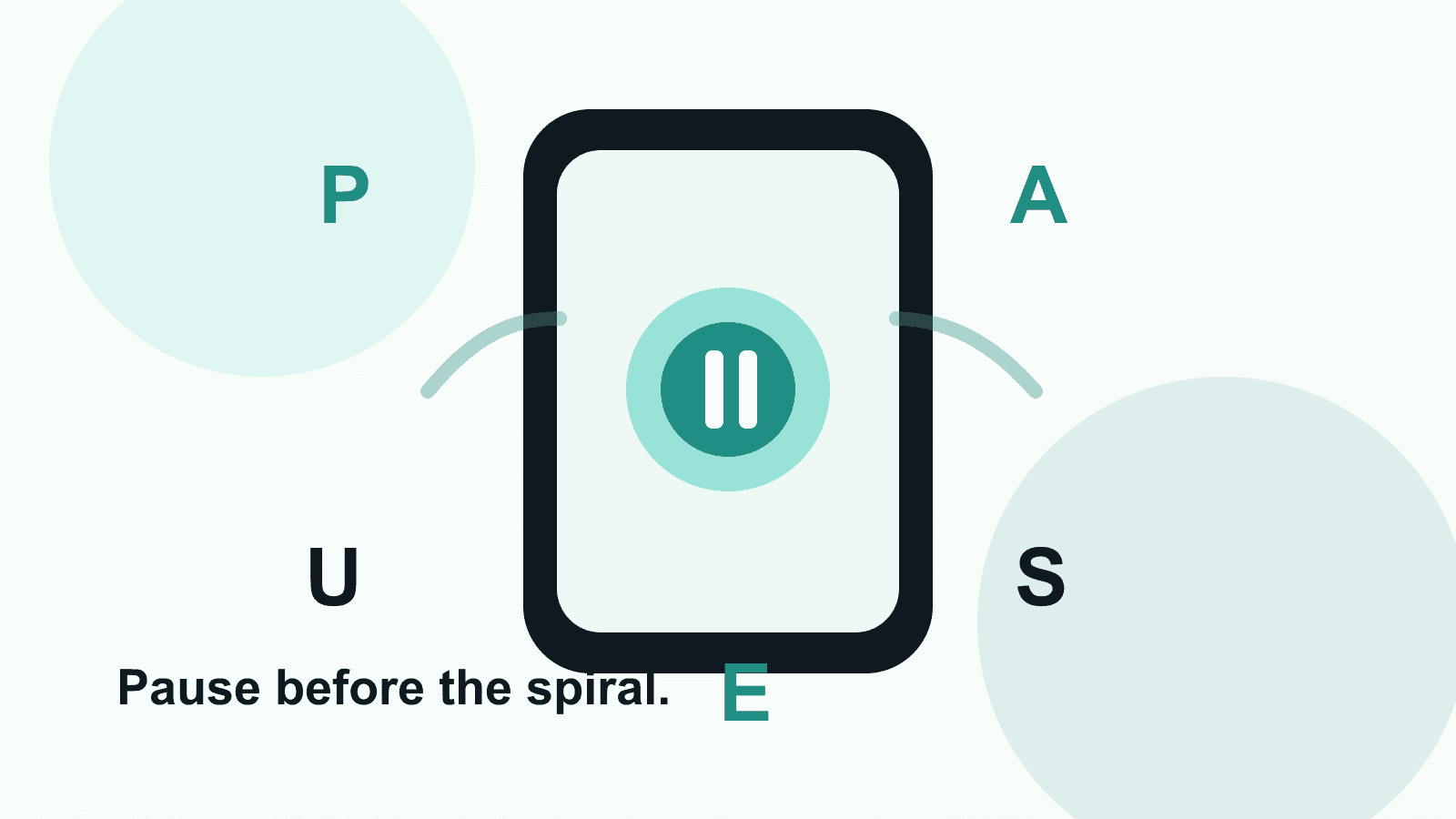
PAUSE stands for Pause, Ask, Understand, Say out loud, Express. It is not a way to suppress emotion. It is a way to slow it down enough that you can hear what it is asking for.
P - Pause
First, stop for a few seconds. Do not text. Do not decide. Do not argue. Do not explain your entire inner world while your pulse is still high.
Make the pause physical. Breathe slowly. Relax your jaw. Put both feet on the floor. Look around the room and name what is actually here. The body is usually the first place where the reaction starts, so the body is a good place to interrupt it.
This first move is small, but it matters. It breaks the automatic chain before the emotion becomes a message, a decision, or a fight.
A - Ask
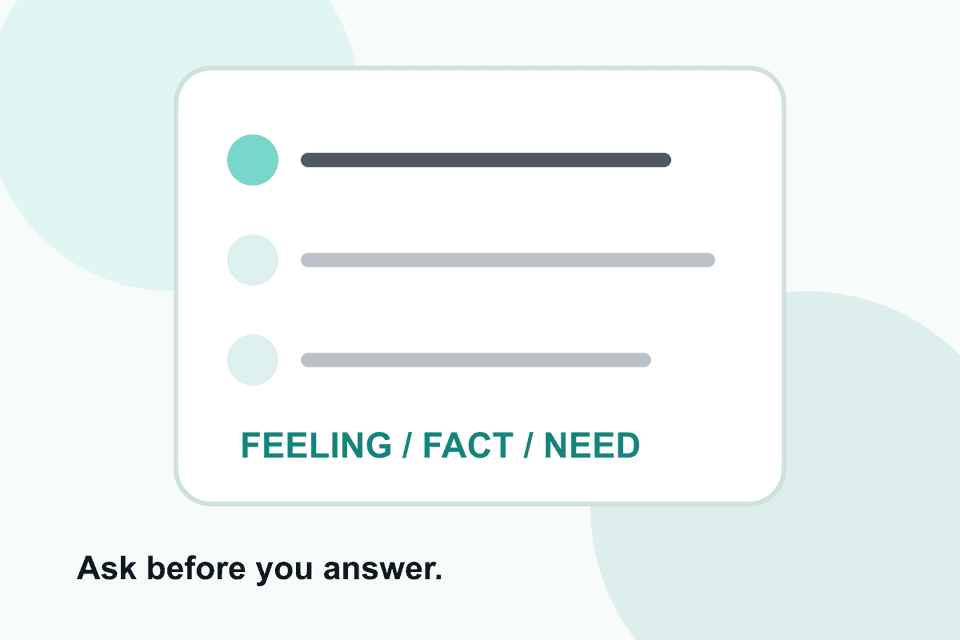
Now ask clear questions. What am I feeling right now? What triggered this? What story am I telling myself? Is this a fact, a fear, or an interpretation? What do I actually need?
Questions change the job of the mind. A minute ago, the mind was building a case. Now it is observing. That shift alone can reduce the pressure to act.
Do not ask questions that punish you. Ask questions that locate you. The point is not to prove that you are wrong. The point is to find out what is happening.
U - Understand
Then try to understand the emotion without judging it. You are not crazy. You are anxious because something feels uncertain. You are angry because something felt disrespectful. You are sad because you wanted closeness. You are jealous because you fear losing connection.
Understanding does not mean obeying. A feeling can be real and still give bad instructions. Anxiety may ask for ten messages. Anger may ask for a sentence you cannot unsend. Fear may ask you to control someone else so you can feel safe.
When you understand the emotion, you can take it seriously without letting it take over.
S - Say it out loud
This step can feel almost too simple. Say the feeling clearly. I am feeling anxious. I am having the thought that she is ignoring me. This is fear, not necessarily reality. I feel rejected, but I do not know the full story yet.
Putting feelings into words is sometimes called affect labeling. Research on affect labeling suggests that naming an emotion can reduce emotional reactivity, including activity linked to the brain's threat response.
It can help even more to use your own name. Riccardo is feeling anxious right now, but he does not need to act immediately. Third-person self-talk creates a little distance. You are still honest about the feeling, but you are no longer fused with it.
E - Express
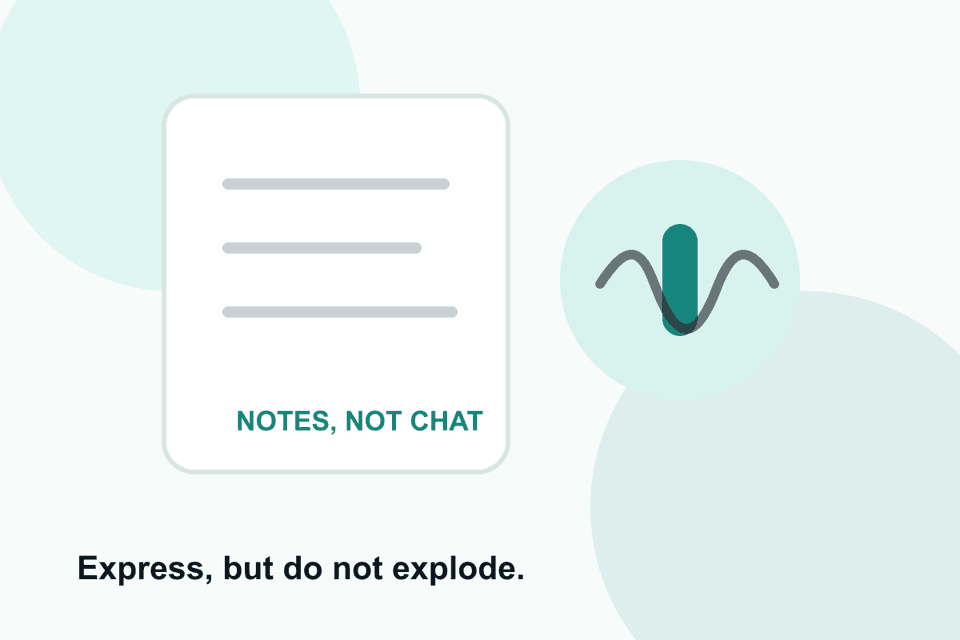
Finally, express the emotion in a controlled way. Write it in Notes. Record a voice note to yourself. Walk and say it out loud. Write the message, but do not send it yet. Do yoga, breathe, journal, or talk to someone calm.
Expression is not the same as discharge. Sending ten messages is not expression. Asking for reassurance immediately is not expression. Making a major decision while activated is not expression. Accusing someone before checking the facts is not expression.
There is a long research tradition around expressive writing, especially through James Pennebaker's work. The practical lesson is simple: private language can help the feeling move. It gives the emotion somewhere to go before it goes into another person.
A simple example
The old loop says: she did not answer. She does not care. I need to message her now. The loop feels convincing because it is urgent. But urgency is not evidence.
PAUSE changes the sequence. Pause: I stop, breathe, and do not send anything now. Ask: what am I feeling? Anxiety, rejection, fear. Understand: I feel unsafe because I wanted connection. Say it out loud: I am having the thought that she does not care, but this is a thought, not a fact. Express: I write the message in Notes and wait thirty minutes before deciding.
After thirty minutes, the same message may look different. It may become one calm sentence. It may become a walk. It may become nothing.
Similar techniques
STOP is the close cousin: Stop, Take a breath, Observe, Proceed. Use it when you are seconds away from reacting.
RAIN is softer and more compassionate: Recognize, Allow, Investigate, Nurture. Use it when sadness, shame, fear, or attachment pain needs care instead of control.
The 5-4-3-2-1 grounding method brings attention back through the senses. Name five things you see, four you feel, three you hear, two you smell, and one you taste. It is useful when anxiety pulls you out of the room and into a future that has not happened.
Worry time, or worry postponement, gives the mind a later appointment. Write the worry down and return to it during a set period. Cognitive defusion does something similar with thoughts. Instead of saying, she will leave me, say, I am having the thought that she will leave me.
The practical version
Use this sentence when you feel activated: Pause. What am I feeling? What is the story? What is the fact? What do I need? What is the calm action?
Then wait at least twenty minutes before sending any emotional message. The wait is not avoidance. It is respect for the part of you that has to live with the result tomorrow.